
History
One patch of ground
The story of Bulgarska Armia, and what has happened here over the last century.
Nicksss93 · CC BY-SA 3.0
The names
-
1923–1944
АС-23
This is where AC-23 played. The pitch is the ancestor of everything that came after.
-
1944–1949
Чавдар
A short spell under a new name, in the years straight after the war.
-
1949–1990
Народна армия
The name several generations of supporters grew up with.
-
1990–today
Българска армия
Today’s name. The building changes; the name stays.
What happened here
- 1909
The first football club
In the “Pustinyata” locality in Borisova Gradina, “Futbol klub” — the first Bulgarian football club — is founded. At the time the spot is still on the edge of Sofia.
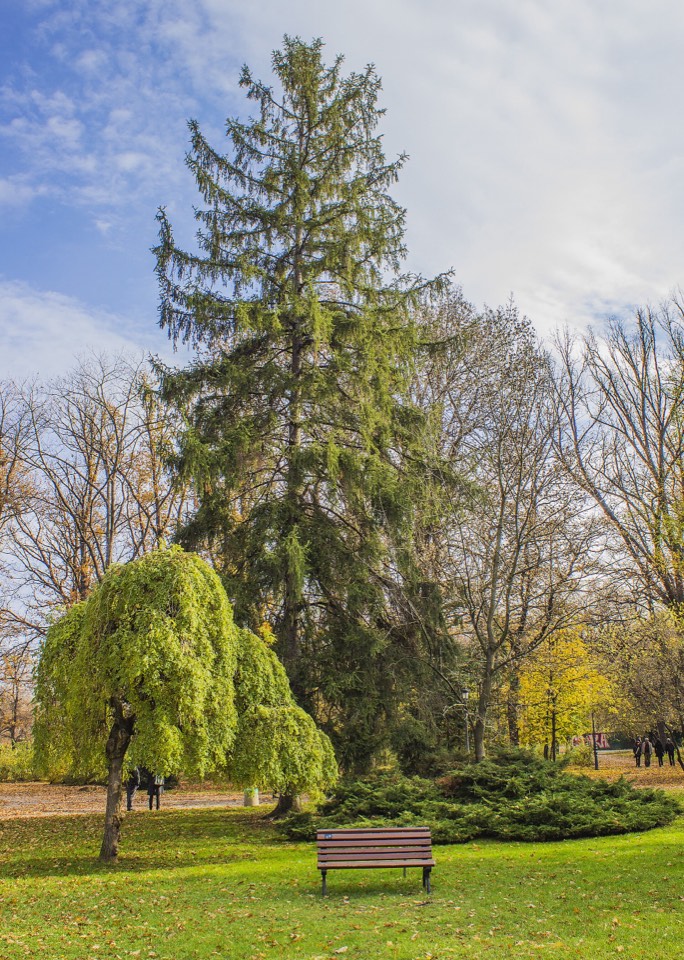
The park around it Miroslav.Nikolov · CC BY-SA 4.0 · Commons - 1922
The land is given “for all time”
Sofia gives the locality to the AS-23 club. In 1930 work starts on the main building — offices, changing rooms, a gymnasium and a store — and a running track is laid around the pitch. On 3 August 1933 the club receives the deed.
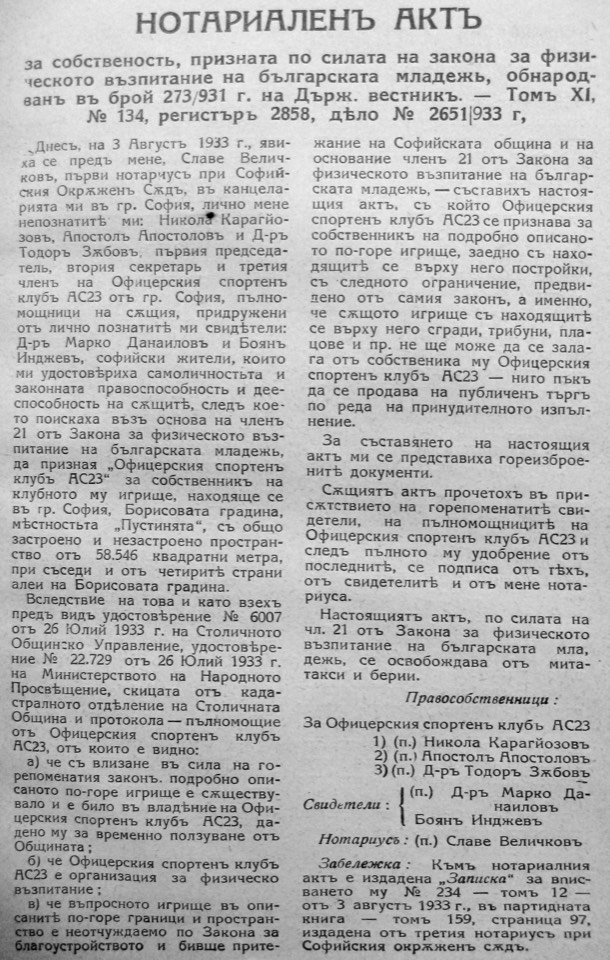
The notarial act for the ground unknown · Public domain · Commons - 1938
Drainage and a fence
A new drainage system with over 1,700 metres of channels goes in. The track is rebuilt on a 25 cm stone base and concreted. A concrete wall goes up around the ground, topped with iron to a total of 2.5 metres.
- 1940
Stands all the way round
The standing places go and the pitch is enclosed by stands for 18,000. Almost the whole build is paid for by AS-23 supporters — the state contributes very little.
- 1944
Chavdar Stadium
After AS-23, Shipka-Pobeda and Spartak (Poduene) merge, the ground is renamed Chavdar. It is nationalised on 19 March 1948, and 13 rows of wooden benches are added to the stands.
- 1965
Construction begins
The ground is almost entirely demolished. To a design by architects Anton Karavelov and Simeon Ivanov, new stands go up along with a concrete canopy over sector A.
The concrete canopy over sector A, which stood until 2024, is already there on the drawing.
- 1967
Opening
The ground takes the name Narodna Armia, with a capacity of 32,000. It belongs to the Ministry of National Defence.
- 1982
Major rebuild and floodlights
Rebuilt and fitted with electric floodlights — from here on, football at night.
- 1998
Benches become seats
In the autumn the benches are replaced by seats. Capacity drops to 22,015 and stays there to the end.
- 2023
The new stadium is unveiled
On 15 February CSKA and the state set up “Sportni Imoti Balgarska Armia” AD on equal shares. The state contributes the ground and the Pancharevo base; the club puts in 28,498,000 leva in cash.
- 2023
The last match at the old ground
On 10 December CSKA lost 0:1 to Ludogorets in front of about 18,000 people — the last official match at Bulgarska Armia before the ground came down.
- 2024
The old stadium comes down
Demolition starts on 1 April and takes four months — exactly as announced. The contractor is Roster.
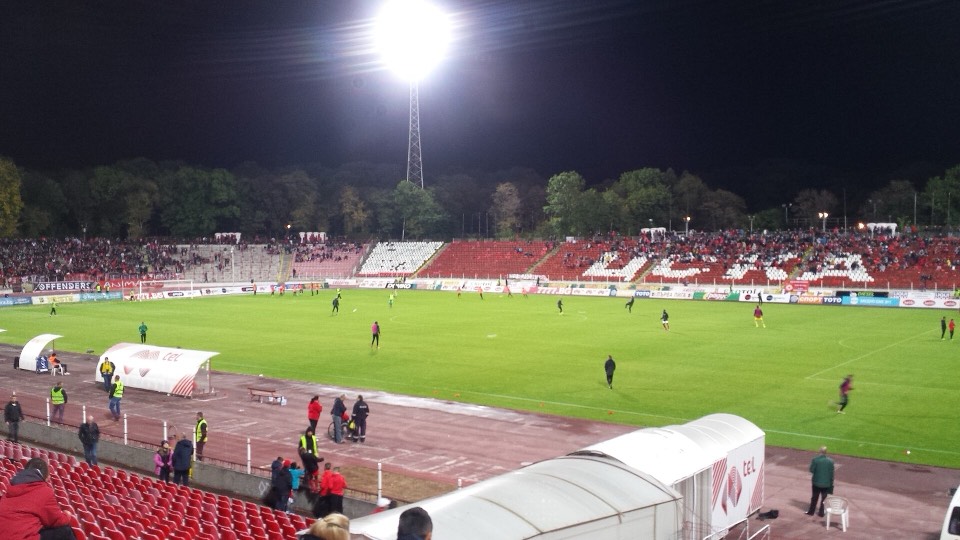
2017 Wiöldcard · CC BY-SA 4.0 · Commons - 2025
Construction starts
Glavbolgarstroy Holding AD begins excavation. The structure is given 18 months.
- 2026
Pitch laid, structure nearing completion
The turf goes down in spring. By mid-year the club says the pitch is match-ready.
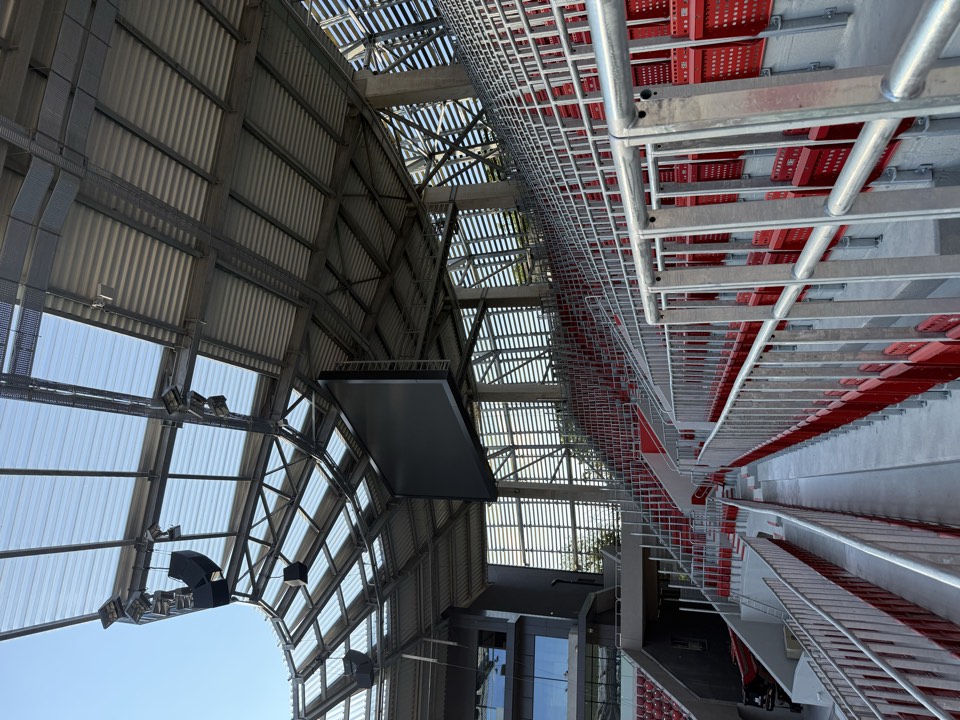
The seats in sector G - 2026
The stadium receives its permit (Akt 16)
On 9 September DNSK issues occupancy permit No. DNSK26-RP-544 — the new Bulgarska Armia is officially commissioned for use, nearly two and a half years after the last match at the old ground. The club aims to return home after the October break, with the Conference League home match against Monaco on 15 October.
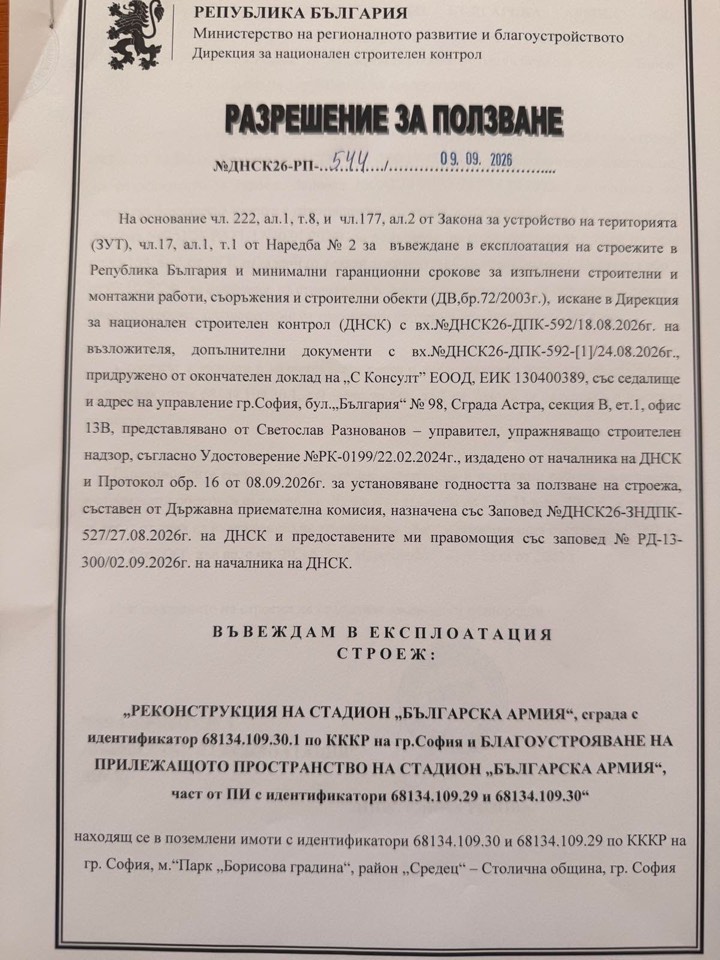
The occupancy permit, 9 September 2026


The nights nobody forgets
Three times CSKA knocked out a reigning or former champion of Europe. Twice they reached a semi-final.
The old ground
This is what it was until 2024.
- A Sector A 6 417
- B Sector B 4 889
- V Sector V 5 689
- G Sector G 5 020
Total 22 015
Sources: stadium.cska.bg; Wikipedia; FCCSKA.com; Sredets district
The Walk of Fame, outside the gate
The Walk of Fame lies outside the ground, in Borisova Gradina. Each star carries a plaque with a name, a Games and an event. What is written here was read off the plaques themselves, from Biser Todorov’s photographs on Wikimedia Commons, rather than copied from elsewhere.
-
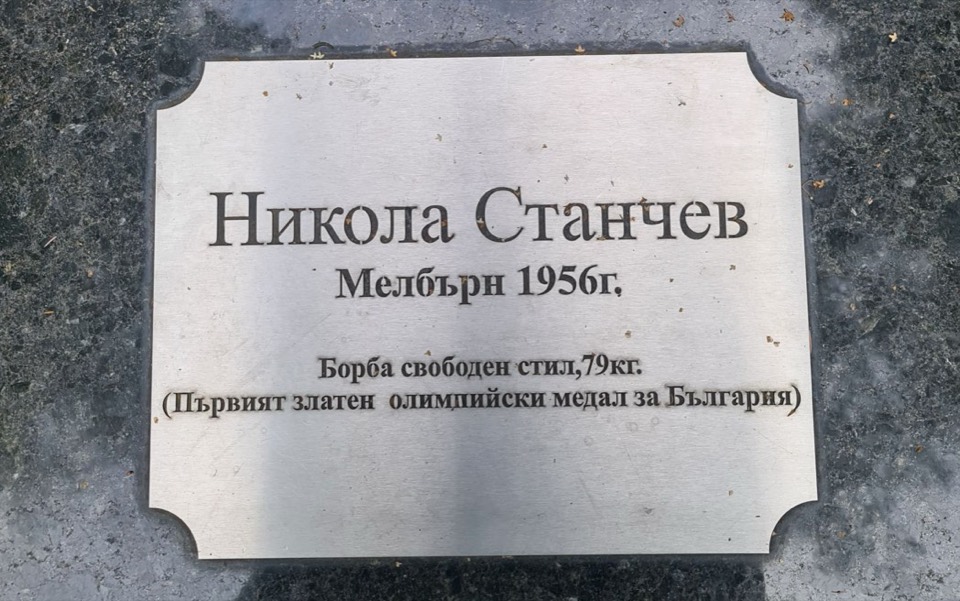
Melbourne 1956
Nikola Stanchev
Wrestling, freestyle, 79 kg
The first Olympic gold medal for Bulgaria.
-
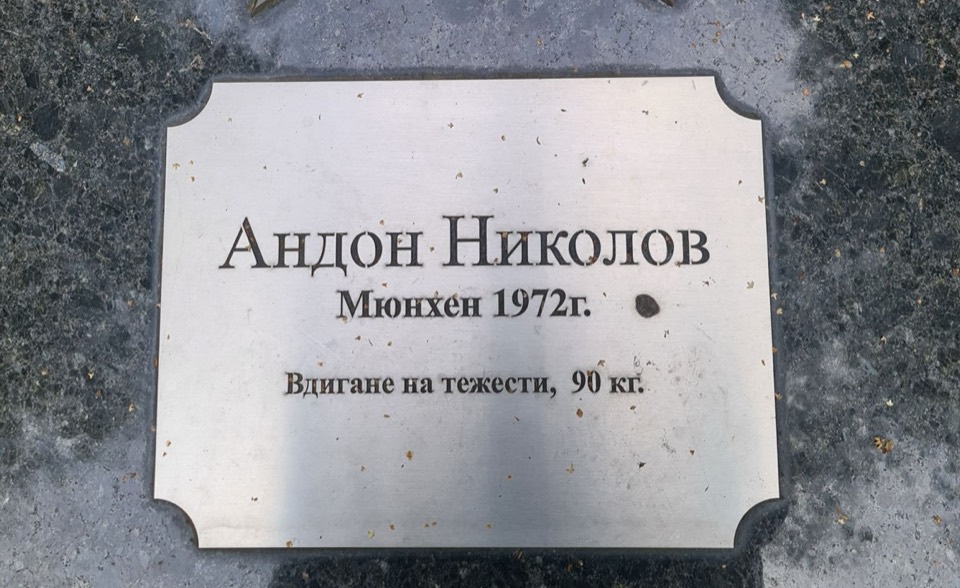
Munich 1972
Andon Nikolov
Weightlifting, 90 kg
-
Montreal 1976
Zdravka Yordanova and Svetla Otsetova
Rowing, double sculls
Their star is on the walk; we have not photographed it yet.
-
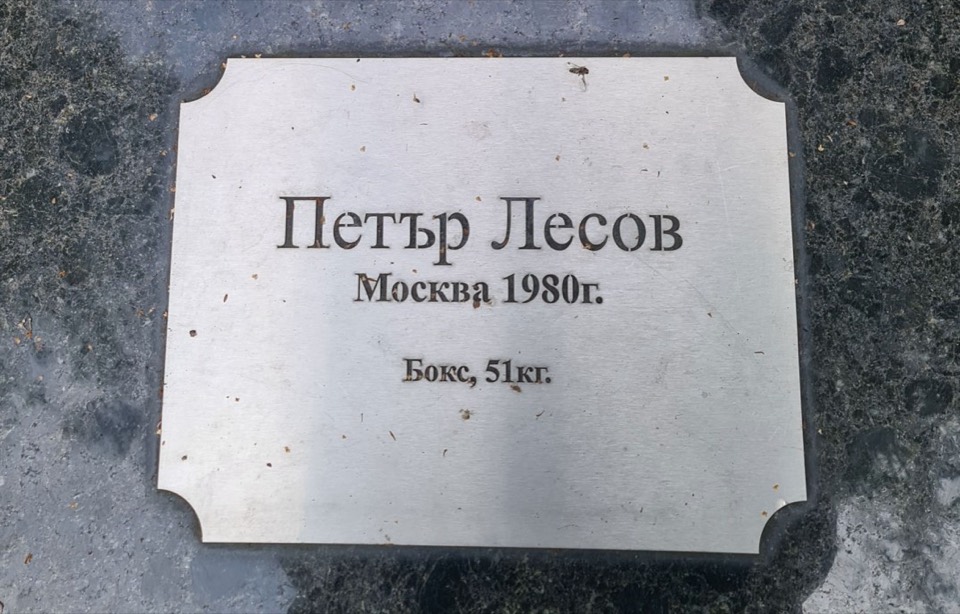
Moscow 1980
Petar Lesov
Boxing, 51 kg
-
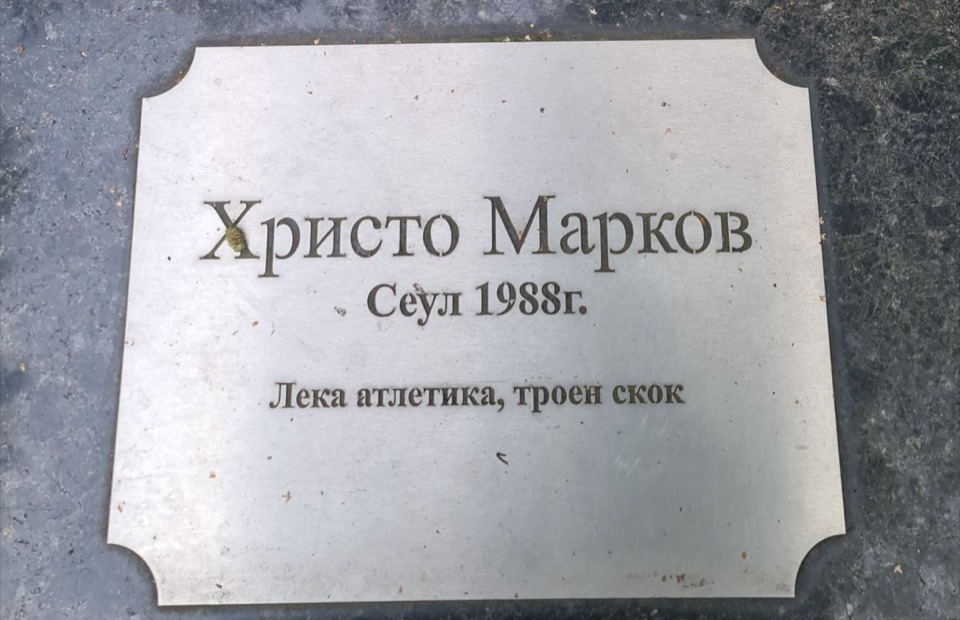
Seoul 1988
Hristo Markov
Athletics, triple jump
-
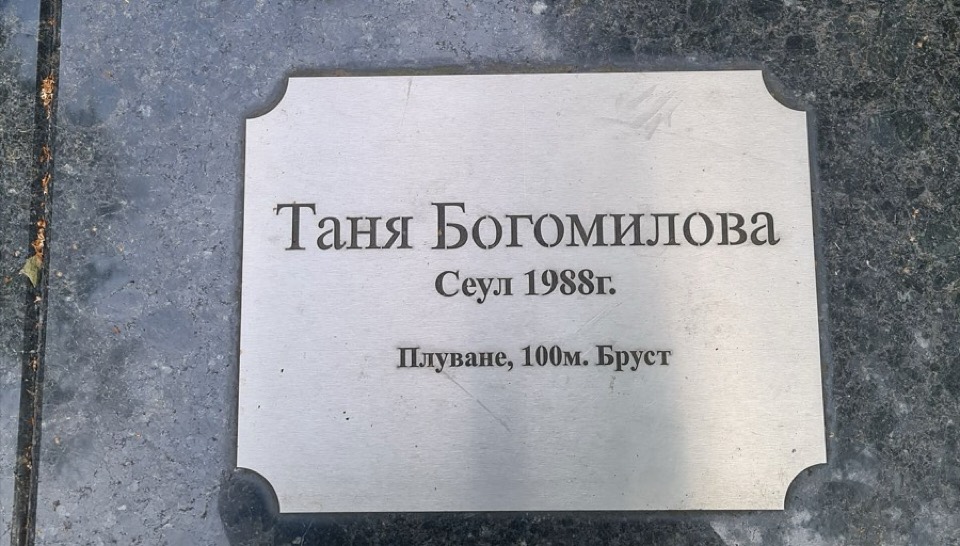
Seoul 1988
Tanya Bogomilova
Swimming, 100 m breaststroke
-
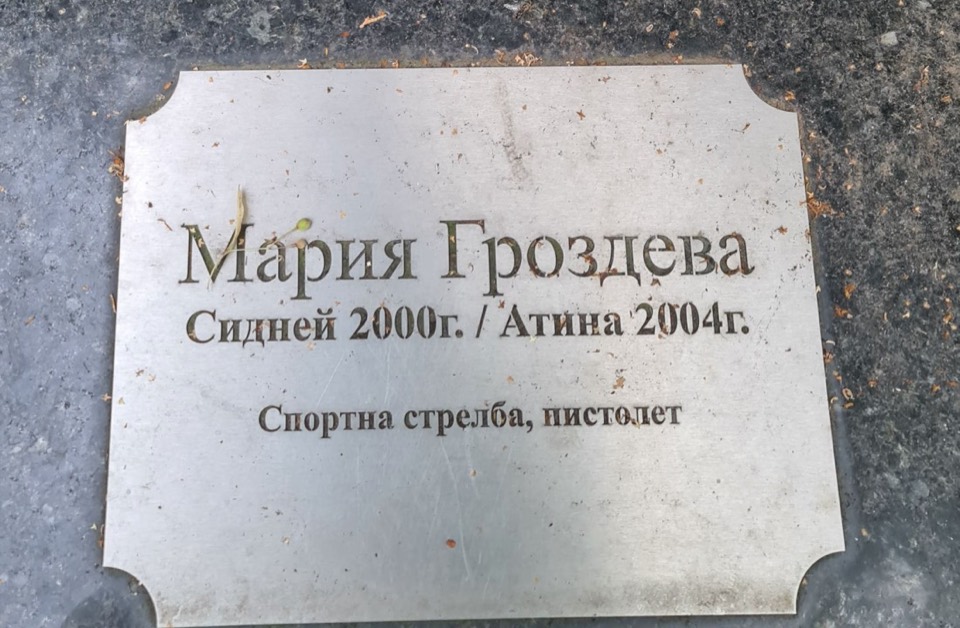
Sydney 2000 · Athens 2004
Maria Grozdeva
Shooting, pistol


Source: The plaques themselves, photographed for Wikimedia Commons · photographs Biser Todorov, CC BY-SA 4.0, cropped by us to the plaques.